Business ETC uses cookies. By continuing to browse this site you are agreeing to our use of cookies. Click here to find out more »
Dublin: 10 °C Wednesday 22 May, 2013

“We are not printing punts” – Central Bank responds to WSJ ‘printing press’ report

The Wall Street Journal’s people-in-the-know say the Central Bank of Ireland is evaluating whether it needs new printing presses.

Image: Photocall Ireland

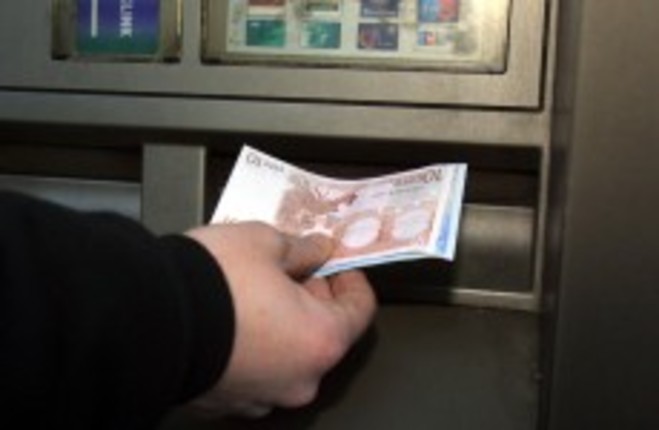
THE CENTRAL BANK of Ireland has insisted it has not begun reprinting the Irish punt, after a newspaper reported that the bank was looking into the purchase of new printing presses in case the euro collapses.

The Wall Street Journal says the bank has been “evaluating” the need to add to its stock of printing presses, as a part of its contingency plans should Ireland either abandon the euro, or the euro collapse altogether.

According to David Enrich, Deborah Ball and Alistair Macdonald’s report:

Officials have discussed reactivating old printers or enlisting a private company, the people said. ”All kinds of things are being looked at that weren’t being looked at two months ago,” according to a person at one meeting.

This morning, however, the bank insisted that it was still printing solely euro currency.

“We are not printing punts,” the spokeswoman asserted.

The bank holds only a small holding of foreign cash – with “only a small holding of US dollar” in its assets, which a spokesman previously told us was “held on a hedged basis”.

The Central Bank’s mint in Sandyford, which previously produced all Irish punts, remains in operation – though it now exclusively prints euro banknotes, and other ceremonial state coins.

Its 2010 annual report said it had produced almost 400 million banknotes last year, including 174 million €50 notes – worth some €8.68 billion – and another 114 million €20 notes, worth €2.28 billion.

Altogether, the mint produced just under €12 billion worth of euro currency last year.

The bank – which continues to exchange Irish punt currency for euro at its Dublin headquarters – also said it had exchanged €3.3 million (IR£2.6 million) of old Irish currency in 2010.

Read the WSJ’s full report on the contingency plans >

Read next:

Comments (86 Comments)

  • Huey 08/12/11 #

    They really need to roll out Noel Dempsey and Dermot Ahern to deny this

    Reply
  • We must ditch the euro, farm every acre of land possible, take back the national roads, take 51% ownership of the potentially 10s of billions worth of natural gas and oil of the west coast, take back our fishing rights, burn ALL bond holders, scrap and redesign the whole secondary education system so our kids can learn more of what is relevant today and so they can hit the ground running in 3rd level / PLCs, employ patriotic professionals as politicians and give them just 20% above the average salary of the private sector, scrap useless sections of local government, scrap quangos, make amending the constitution quicker and easier, lower the corporation tax to 9% and which will draw huge foreign investment and litterly 150k+ jobs. These jobs will strengthen the currency in and after it’s transition. this money cam then be nacked by our nation’s willing to pay and not by some foreigners fiat money thats printed out of thin air and is lent to us at interest.
    All of above could happen, if we male it happen.

    Reply
  • If the worst comes to the worst, I DO NOT want to see Mr Aherns smirking face on any bank note please!

    Reply
  • Never believe a story until it’s officially denied!

    Reply
  • Interesting article. The WSJ apparently has several sources for this. Both positions outlined above are potentially true, ie “We are not printing punts,” (Central Bank), and “evaluating” the need to add to its stock of printing presses, as a part of its contingency plans (WSJ). They are not mutually exclusive, and in this time of crisis, all contingencies need to be considered.

    Reply
    • The WSJ also has vested interests – its American for starters and then you have to look at the stance of its owners. Mind you it can only be short term vested interested – if the Euro goes there will be pain for every other currency and economy.

      Reply
  • Would anyone really notice if the printed an extra billion for under the states cushion! Ah go on…..just a few wee bob extra please

    Reply
    • What I find a little bit ironic about all of this is that earlier this year it emerged that four Irish banks had literally created €17 billion out of thin air, and people barely batted an eyelid.

      The banks were still covered under the state guarantee, so they issued bonds (backed by the State), ‘bought’ the bonds themselves, and then used those bonds as collateral to get actual cash from the ECB.

      Just like that.

      Reply
    • Well, that’s kinda how it works… new money is always being put into circulation, and this is all well and good as long as nobody notices within a single currency. If we changed back to the punt and printed off enough to pay back our debts, the economy would be no better as our exchange rates would be abysmal. This means that the cost of importing would go way up and drive up the price of all imported goods and our exports wouldn’t be feasible.

      Reply
    • @Conor (and Peter, below) – I know that’s the function of a central bank; my point is that in Ireland’s case, this is the function of the ECB and not the Irish Central Bank. If Ireland doesn’t have the power to unilaterally increase the number of euros in circulation, it’s a bit bizarre to think it can just manufacture money in other ways. Just my tuppence though.

      Reply
    • Sean 08/12/11 #

      Gavan to be fair they didnt create money, they created collateral, the loans to the ECB still have to be repaid, theyre basically just unsecured, they only created the bonds because the ECB cant do unsecured loans by its own rules.

      The net monetary effect is actually zero

      Reply
    • So I could have said an extra 20 billion and its possible someone could be persuaded if I said go on go on ya will of course go on…..

      Reply
    • It was a workaround so the ECB could provide funding indirectly to the State, it was never a secret. You can only buy up worthless bonds for so long, of course.

      Reply
  • I’ve managed to get my hands on what the new punt will look like check the link out!! http://twitpic.com/7mrdgj

    Reply
  • In fairness to the Central Bank and the Government they could never admit this in public. I suspect that Central Banks and governments all over Europe are making contingency plans for such an event. However if somebody actually said this in public then the markets would run with this news and that makes it more likely to happen.

    A lot of the problems that have been created in the financial markets over the last while have been created by different politicians/leaders/bankers mouthing off at different times and giving conflicting messages. Sometimes the less said the better, at least until there is some definite to say.

    Reply
  • Ah the old deny what you haven’t been accused of.

    Haven’t heard one of them in at least a week!

    Obviously, they aren’t actually printing punts but if they hadn’t had a conversation about the practicalities of what would involved they bloody well better start one.

    Reply
  • Danny D 08/12/11 #

    We’re not looking for financial assistance from IMF and ECB either…

    Reply
  • How many Endas will there be to the Euro?

    Reply
  • Berties head on a 20k note would be appropriate but unfortunately that maroon blob of a ting wouldn’t fit on anything now

    Reply
  • Raf 08/12/11 #

    “Never believe anything until it has been officially denied.”

    —Otto von Bismarck

    Reply
  • Cb buying printing presses. I’m stocking up in p45s in work. Hope neither of us have to use them soon

    Reply
    • Gavan it’s called quantitive easing when it is done in the UK or the US.

      Re: the currency, why would we go back to the punt instead of issueing an Irish Euro which at inception would be at par to the present Euro. We would still need new notes and coins but this would stop the price gouging that was experienced at decimalisation and when the punt was converted to euro.

      If this were to happen the Irish Euro would find it’s appropriate against any other new currency that resulted from the fallout as well as the existing ones.

      Reply
    • Peter, that would be exactly the same thing. Irish Euro would be no different to a new Irish punt, just a different name. We could call it the Punt Euro.

      Reply
    • And then we could Punt the Euro back to Germany/France….

      Reply
  • Leaving the Euro would not be a disaster, it would probably be the start of real recovery. I am just happy the pound is still around so we have a currency we can link to.

    Reply
    • Exactly Daniel

      Reply
    • Why is there a need to link to a currency? Why would we not let the punt be of equal value to euro and let it find its own value.
      On a side note Im off to Poland for the euros. If the euro goes, the trip could be put out of reach. I must get the hostel to take my money now.

      Reply
    • Make sterling legal tender in ROI, to run concurrently with the euro. Then the customer can choose which currency to use. Exports and imports to the uk become easier. If a store has labels priced in sterling and euros which big chains often do with the euro price usually 50 per cent higher, the consumer has more choice.

      Reply
    • If we use Sterling then we are going to be dealing with the same problems that the Euro causes, having a currency that does not meet our needs and an interest rate that is set to others requirements.

      It may appeal to some here who want to turn Ireland back a hundred years but in the modern world it is not a solution.

      Reply
    • @ tigerisinthezoo They use the Zloty in Poland, not the Euro

      Reply
    • Surely neither the euro or sterling belong to Ireland, so it makes no difference to average person. Re introduce the Punt if you like, then we all have freedom of choice, if the three currencies run concurrently.

      Reply
  • Months ago I would have said this is detrimental but it is now a more viable option, we need to devalue big time and I know they are positives and negatives but at this stage the positives far outweigh the negatives, in Iceland Mc Donalds couldn’t compete anymore and had to leave, Time to starting buying Irish not cause we have to but because its so cheap to do so, more jobs, more industry, our own sovereignty, the list goes on…

    Reply
    • Why do we need to devalue whilst our exports are roaring ahead?

      Reply
    • The impact would be immensely bad. I’ve no doubt we’d get past it but as I said elsewhere brace yourselves. Its no joke going back to the Punt. It will hurt like hell.

      Reply
    • Peter. Our exports are not roaring ahead. They are doing well but it is primarily a very small no. of specialized companies – primarily Pharma. It is a multi-national boom. Most of my business is selling to America, Irish produced goods. It’s a damn hard market at the moment.

      Indigenous exports are finding the going tough, who isn’t I know, but there is a bit of a myth out there that the exports are roaring ahead.

      Going back to the punt will be painful but the Euro has no future. It has one if it goes back to 7-8 core countries and works out a deal for the rest to leave.

      The punt would then be linked to a basket of currencies.

      Reply
  • bring it back and kick this monopoly money !

    Reply
  • What did they do with the old ones?

    Reply
  • Very good Dars. Bertie won’t be happy at such a low value but perhaps a brown paper bag could be put in his hand to make him feel better

    Reply
  • Yes they are I was told that by a member of staff in the mint ( in march )
    He was told just in case money

    Reply
  • It is not a good thing that we’re at this stage :(

    Reply
  • This story changes nothing – CB has to plan for contingencies, only to be expected.

    Reply
  • Who does Ireland trade with? The UK. Who does the UK trade with? Ireland!

    Therefore get the £. Simples.

    NB: that is very oversimplistic, but still Sterling is better than the Euro for ireland.

    Reply
  • While still unlikely, it has moved from imposable to possible.

    No need to print new currency, just stamp the € notes with a harp. That will get us through the first month or two and keeps the cash / vending machines running. Arbitrage in coins could be a problem, but the problem would be in Europe, our € coins would be worth less than theirs. Was it the old 10p was the same as a guilder coin, something like that. Anyroad, a dab of inc will sort most of the mechanics, after that, it’s a leap into the great unknown.

    JC

    Reply
    • This, if anyone’s interested, is precisely what they did when the Austro-Hungarian empire collapsed. They literally just stamped a country’s name on a number of banknotes and used only those stamped ones as a proxy currency before they had a chance to mint their own bespoke one.

      Reply
  • *backed

    Reply
  • Obviously they will deny this but I would be interested to know if any government or central bank officials still have their savings in euro..? I would think a lot of Swiss Francs are being bought up at the moment. Going back to the punt would certainly devalue our currency but would the rise in inflation out weigh the benefit of being more competitive? With our low corporation tax and the unique tax avoidance technique known as the double irish, we could well see more multinational blue chip companies here. The challenges would be subsidising imports by possibly taxing exports. Managing mass emigration will also be tough. Europe is in big trouble!

    Reply
  • Does that (bringing old punt) mean food and fuel will be cheaper?

    Reply
    • Probably make it more expensive for a while seeing as we import an unbalanced amount of beef, fish, sugar, bread, cheese etc etc.
      Being a self sufficient island nation went with membership of this benign, democratic and incorruptible EU

      Reply
    • Domestic produce should stay more or less the same (excluding those trying to make a quick punt nua by hiking prices) imported goods would shoot up in price. So fill your oil tank soon because oil will go up.

      Reply
    • In the short term a new Irish punt would devalue against all currencies so as Dermot says prices would probably go up because the cost of all imported goods would rise. As we import most of our fuel for car use and electricity generation those costs would rise. The same would apply to all foods that we imported. Domestic food prices would probably also go up, although by probably not as much, because the costs of production would be more.

      Tourism would probably benefit because it would be cheaper for people to visit here and it would cost more for Irish people to go abroad so that would be one bright spot. Exports would also be cheaper although again they would be affected by the increase in production costs so the benefit of devaluation would be lessened.

      Reply
    • @Jim –
      There is always NH3 or ammonia for the uninformed. Converting current petrol/diesal engines doesn’t take much effort(mainly changing the compression ratio from 15:1 to 10:1 and job done).
      You also get the benefit of not emiting greenhouse gases and it has a much higher eneregy density than hydrogen. In fact its on par to petrol.

      Ammonia is actually carbon negative to boot as it can be used to take existing carbon dioxide out of the atmosphere. We already produce quite alot of it from agriculture and unlike other biofules it wouldnt impact the amount of food we produce.

      Take control over the NCT and use the funds to subsidize the conversion of existing engines over to NH3, wouldnt be that expensive anyway. Right now the money made from the NCT just leaves the country anyway. Better putting it to use.
      Its a much faster solution than waiting for the cost of electric/hydrogen fuel cell cars to go down and you could convert a car/heavy machinery to use a fuel which is produced in Ireland irregardless of how old it is.
      You also don’t need to worry about reduced range like you do with electric and hydrogen solutions.
      With hyrogen the energy density is too low to be of any use for heavy machinery which doesn’t really solve things as you would still need to use heavy machinery for production which would still use greenhouse emmiting fuels.

      If carried out by a competent government we could be recovering within one or two years rather than taking the EU option of austerity for the next ten years at least according to Merkel and a handover of power.

      I am not sure as to whether the cost of food produce would go up. I think the agriculture industry in Ireland would be more than capable of providing competitive prices for actual base ingrediants(meat, vegtables etc.). Other countries already have a problem competing with us when it comes to price with regards to what our agriculture industry produces.
      You could argue that prepackaged seasoning mixes and whatnot which are imported would increase in price but there is nothing stopping people from learning how to cook :)

      Its not like people survive from Cajun seasoning now is it.

      The argument that production costs would increase doesn’t bode well with me as most of the companies producing things and creating jobs are multi-nationals. They will need to pay the higher cost for materials irregardless of whether they produce in Ireland or not.
      What they would be looking at is the cost of actually manufacturing things rather than the cost of importing things. We would be competitive in that regard and could offer them a means of lowering production costs. And that is not even taking into account our corporation tax rate.

      If the government aren’t printing punts then they aren’t even attempting to fight for a better deal. If they are not planning for the worst case scenario then they really shouldn’t be in power. Stamping euro’s once we are booted out is not an ideal situation.
      Pretending like Germany or France give a rats ass when the IMF have been much more accomidating also doesn’t look good.
      The fact that they are taking advice from Geithner is just plain idiotic.

      There are too many “Someone else will fx it!” people in and advising government. Where the hell are the contigency plans.

      Reply
    • John – I can’t argue on the technicalities of what you suggest because I don’t know enough about it. However I’m wondering if such an ideal solution exists then why isn’t this mainstream already? And lets not talk about the government here, if this was such a feasible solution and profitable surely the private sector would be all over it.

      In any event the idea that we could convert overnight to an oil and gas free economy just seems a bit pie in the sky. Therefore we would still have a dependency on importing it for a few years and those costs would rise because our new currency would devalue and most like in a significant manner. And those costs have to be factored into anything we produce including agricultural produce.

      And that only covers the foodstuffs that we grow in Ireland. We import a vast amount of foodstuffs that doesn’t grow in Ireland and not just luxury items. Basic foods such as tea, coffee, fruits. In 2009 we imported almost half our food. Even if that amount has gone down a bit that’s an awful lot of food which would rise in price.

      Reply
    • @Jim, I never said we would convert over night. I am mearly adding more data to your cost benefit analysis.

      The attitude of “well if its so great why hasn’t the private industry been all over it” is a bad attitude to have, if everyone thought that way instead of actually researching then nothing would ever get done.

      The process of convertng lets say a diesel engine doesn’t really require anything new. Nothing really patentable about it., and so there is a reduction of incentive for private industry to manufacture solutions.

      Then there is the fact that in order for a conversion of your engine to be useful you need to have ammonia available as a fuel source at petrol stations(chicken and egg scenario).

      Then there are car manufacturers, they are not interested in converting your current car. They would prefer charging a premium for their new car.

      Its not the first time that the better technology has been ignored. Take nuclear reactors as an example. Back in the 1960’s the same guy who invented the light water reactor invented something called a liquid floride thorium reactor. The liquid floride thorium reactor(lftr) operated at atmospheric presure and was passively safe(didnt need human/mechanical intervention and could not melt down), it used a fuel(thorium) that was one of the most abundant resources available on earth and had virtually no waste. It was also more efficient than uranium-238. The research halted becuase uranium-238 was better for military proliferation and it was never started again because GE and other companies made more money selling you uranium-238 as it was a material which was rarer than platinum(supply and demand). The cost of building a light water reactor is quite low, the problem is you are stuck with a contract with whoever built it which prevents you from shopping around for cheaper fuel.

      The likely way we will see ammonia hit the mainstream without giving it a nudge is through fuel cells and a shift to electric motors.(useful for selling latest car, not useful for converting existing cars/gaining energy independance quickly)

      I would prefer the government got involved if it meant energy independence and complete control over our future. I do agree that the government can be idiotic most of the time but thats why I am posting an actual solution here which can get us out of this rut we are in(go check the energy density of ammonia if you dont believe me). Hobbiests have already converted cars.

      The current strategies the government have utilized are just plain stupid and do verry little if anything at all to solve our energy crisis or give us independence. Carbon credits just allow companies to say that they are green as long as they pay the gov enough money, our subsidization of airtricity will soon blow up in our face now that they have to stand on their own two feet and try and remain solvent(electricity bill will increase dramatically).

      I dont really agree with your cost benefit analisys because there is no detail. You are not taking into consideration the fact that Merkel herself has said that it would take at least 10 years of austerity to solve the debt crises, your not taking into account how frequently their projections have been false, you are not taking into account strategies we might use to solve the issues you bring up and the timelines involved with said strategies compared to the 10 years of austerity. Your not taking into account the fact people wont be able to afford petrol/diesel at the current rate of austerity. Your not taking into account the jobs lost from tax harmonization.

      I hope to god that the government are actually thinking this through properly and not just making over simplified assertions.
      One of the issues with telling people that they are not printing punts when they are is that they recieve no input from people from groups like the engineers assosiation of ireland as to what issues we would need to resolve, what options are available and how quickly we can resolve them.

      Yet again, politics being politics and everyone else paying the price.

      Reply
  • It’s all academic. The euro will survive and the outliers, Portugal Spain and Italy, will come to heel. We already have. Uncertain about Greece though.

    If the euro falls it will be a catastrophe for the eurozone, a disaster for the UK, create serious problems for the US and China and te rest of the developed world will feel the backdraught. That’s why I believe there will be a short term solution involving the ECB creating limitless liquidity (in theory) using the IMF as a conduit. Following this, over the next year or two, they will hammer out a permanent solution involving treaty change that copperfastenxs the currency along the lines envisaged by Maastricht.

    Reply
  • How would prices go up exactly, if i remember correctly a euro is 78.7564p

    Reply
    • Because our currency would have to float against other currencies as it did before we joined the Euro. A starting rate would be set at conversion but after that the markets would decided the actual rate of exchange. And the only way it would move is down.

      Reply
  • Yes, they are printing An Punt Nua. They started at a low level. A few months ago. Quite right. It is prudent to do so, given the circumstances.

    Reply

Add New Comment