Business ETC uses cookies. By continuing to browse this site you are agreeing to our use of cookies. Click here to find out more »
Dublin: 18 °C Wednesday 19 June, 2013

Nobel prize for economists who worked on matching schools with students

US economists Alvin Roth and Lloyd Shapley share the award for their work in ‘the theory of stable allocations’.

Image: AP

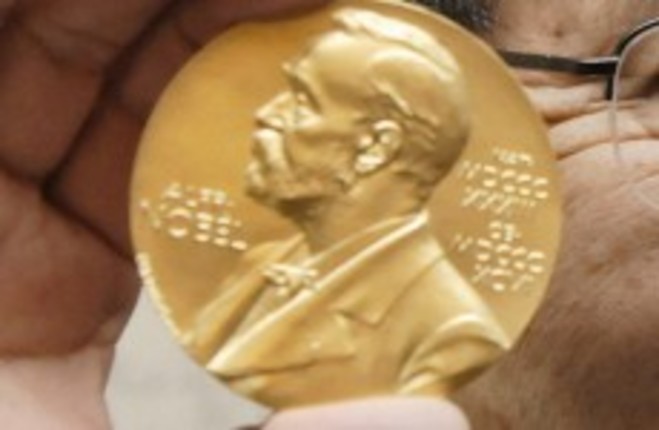
THE NOBEL PRIZE in economics has been awarded to two US game theorists who separately worked on ways to match students with potential schools, and transplant patients to organs.

Alvin Roth and Lloyd Shapley were jointly awarded the prize “for the theory of stable allocations and the practice of market design”.

Their work has variously involved coming up with new systems for assigning aspiring students to individual schools and colleges, work on calculating the voting power of individuals in large groups, and an algorithm to solve the ‘stable marriage problem’.

The latter – solved by Shapley in the Gale-Shapley algorithm – involves taking a group of men and women, with equal numbers of each, and ‘marrying’ them so that no man and woman would preferred to be with each other ahead of their actual spouses.

This algorithm has been elaborated to be applied in other circumstances, such as in the assignment of married couples to hospitals and nursing homes – allowing an efficient allocation of resources while also ensuring that long-term couples are not split up. This system was originally devised by Roth, his co-winner.

Roth’s work, meanwhile, has also seen a total overhaul of the high school selection process in New York – replacing a previous system where students identified their top five preferences of schools, and where this list was then shared with schools who chose their preferred applicants. This meant some students would skew their preferences, trying to ‘game’ the system.

Roth’s ‘incentive compatible’ system – where each student’s chances of getting their preferred school are improved by total and honest disclosures – eliminated these risks, and was later applied to Boston, eliminating a system where some students could be ‘rejected’ by all schools and then just assigned to whichever had a vacancy.

Harvard academic Roth told reporters on a teleconference that he had missed the first call from the prize selection committee – and had to get his wife to rush downstairs to answer the phone, shortly after 7am local time, in order to take the call informing him he had won.

Roth commented that the call “was worth waking up for” – and asked about how he planned to celebrate today, he simply commented: “Coffee.”

The chairman of the nominating committee, Per Krusell, said the committee had not been able to contact the 89-year-old Shapley, who lives on the US west coast and would have been called by the committee at about 3am local time.

The two will split a prize fund of 8 million Swedish kronor, or about €920,000.

The economics prize is the only one of the six Nobel prizes not to have been created by Alfred Nobel himself in his will, but rather by the Swedish central bank, which created the ‘Sveriges Riksbank Prize in Economic Sciences in Memory of Alfred Nobel’ in 1968.

The award is considered a de facto equivalent to the other Nobel prizes, however, and is selected by the Royal Swedish Academy of Sciences in like manner to the prizes for Physics and Chemistry.

  • Share on Facebook
  • Email this article
  •  

Read next:

Comments (8 Comments)

  • The EU sure as hell wasn’t going to get the Nobel Prize for economics.

    Though it is certain that generations of people writing about them and their unique approach to economics will be contenders.

    Reply
  • All Nobel prizes are a joke , how can Obama have gotten a peace prize while engaging in two wars , one of which was deemed illegal . He also had a Kill list at the time , nothing but propaganda . Also Milton Friedman got one for his economic model which couldn’t be implemented without removing the democratically elected leader of chile and replacing him with Pinochet who murdered and disappeared thousands of Chileans . Absolute joke .

    Reply
  • Here’s something mainstream media willingly ignore: there’s no such thing as the “Nobel Prize for Economics”.

    Alfred Nobel explicitly requested no such prize be attached to his name in 1895. Some 60 years later the Bank of Sweden hijacked the awards and announced a prize for Economics “in memory of Nobel” against the will of Nobel and his descendants. It’s awarded after the real five Nobel ceremonies are finished – to explicitly show that it’s not a Nobel Prize.

    One of the main reasons for Nobel’s disdain for awarding a Nobel prize for Economics was that it would confer unwarranted respect to the winner in the eyes of the public.

    Reply
  • Hard work and well earned achievements.

    Give yourself a silver star and a toffee.

    Reply

Add New Comment