Business ETC uses cookies. By continuing to browse this site you are agreeing to our use of cookies. Click here to find out more »
Dublin: 6 °C Friday 24 May, 2013

In numbers: How much government spending is protected under Croke Park?

Public pay and pensions can’t be touched under Croke Park. So just how much of public spending does that make up?

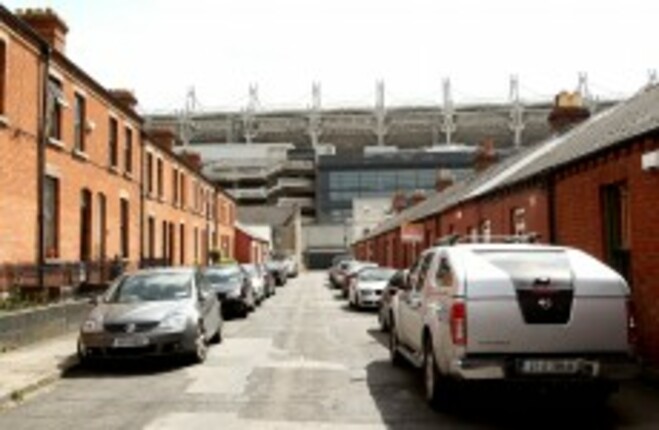
A resident's view of the Cusack Stand at Croke Park, where the current public service pay deal was negotiated and after which the deal is informally named.
Image: INPHO/James Crombie

WITH ALL EYES now firmly fixed on Budget 2013 – which is now just over six weeks away – the prospect of the Public Service Agreement 2010-2014 (or the ‘Croke Park Agreement’) has come back into firm view.

The basic premise of the deal is that public servants won’t face mandatory redundancies or pay cuts, but instead agree to greater flexibility in working practices or to be moved between state agencies.

The deal has long been divisive – coming in for criticism last week when it was (incorrectly) suggested that the reported savings were being overstated – and many believe that the state’s current financial state means the deal should be reviewed.

The current deal, which was agreed before Ireland was forced into an EU-IMF bailout, contains a clause which allows the government to review certain parts of the deal if the economy slides further. Many have argued that now is that time.

In order to help you make up your own mind ahead of Budget 2013 – which will include €2.25 billion of spending cutbacks, details of which we don’t know much about yet – we’ve gone back over the 2012 figures to see exactly how much of government spending goes on pay and pensions.

There’s a few things to bear in mind: a reader’s interpretation of the figures will depend on whether they include capital spending (i.e. major one-off projects like school building, road construction) as well as current spending (more everyday spending like grants, pay, and general operations). We’ve listed both.

Also, the figures below are a slight update from Budget 2012, issued by the Department of Public Expenditure and Reform earlier this year, but they don’t include any overspend or underspend in each area. The health figures, for example, were the aspirational ones from the start of the year and not the current ones.

The spreadsheet below contains a breakdown of the spending by ‘vote’ (an individual allocation in the Budget). Readers should note that there are other areas of spending not accounted for in a ‘vote’, such as contributions to the EU Budget, the running of the Oireachtas, and bank recapitalisation.

Figures for public service allowances – which total €1.1 billion each year – are not included, as the head of the Croke Park implementation body has indicated such payments are not protected under the agreement. This is disputed by trade unions.

The figures show that total ‘voted’ spending in 2012 was estimated at €55,825,664,000 (of which €51,863,876,000 is current, and €3,961,788,000 is capital). The total pay bill was €15,374,715,000, and the total pensions bill €3,038,252,000 – giving a total of €18,412,967,000.

This means that pay and pensions account for 35.5 per cent of current spending, and 33 per cent of all voted spending.

If the spreadsheet below does not load, it can be viewed in a new window here.

Read: Is Fine Gael taking disciplinary action against TDs over critical article?

Read next:

Comments (29 Comments)

  • Is it this week the Germans will be leaking our budget cuts or next?

    Reply
  • Is there anyone who is just going to look at this calmly and objectively. We know many are under utilised and overpaid in the public service – RTE stars, politicians, county managers etc etc but we also know that many are overworked and underpaid – frontline health staff, city Guards etc. All I am hearing is either “hands off” or “rip up”. Two contrasting shouting voices are going to get this country nowhere until people start acting like adults and at least trying to listen to the other voices. It’s infuriating just constantly listening to uninformed vested interests bickering!

    Reply
  • When it says pensions, does it mean the amount paid to current pensioners or the amount the gov puts aside for current PS employees when they retire or what?

    And as a matter of interest can many one out there clarify how the gov classifies the money it collects from current PS employees which is paid towards pensions (which id imagine is quite large based on what % they pay) Is it put in a savings fund or is it classified as income collected or what?

    Reply
    • My question also; for example I have been informed that the huge amout that is taken from my pay weekly for my pension in no way reflects the measly €48 per week that I’ll get when I retire. How many of you realise that when you’re talking about the ‘huge PS pensions’????

      Reply
    • Two questions there Eric, in the first one as I understand it the pensions are paid out of day to day income, there is no Dubs per se.

      One the second question, the PRSI element goes to the social insurance fund just like private sector payments, the pension levy in the other hand I think goes to day to day income. I am open to correction on any of the above however.

      Reply
    • Public sector pensions are unfunded, that is they are paid for directly from taxes. This is why most current public service workers retiring in 20/30 years time could get almost nothing unless the system is reformed.

      Reply
  • Here we go again.

    Reply
  • Help the people in the claims office for disability as they are under pressure and being abused daily because of the delays which are at the behest of senior management. Deploy more support staff to that department and clear the dreadful workload. It’s a form of bullying on those poor people and it is torture to the sick people waiting for disabilitybenefit.

    Reply
  • Eddie Hobbs continues his attack on public servants and I have asked him to retweet those who objected to his piece the other day, yet he won’t and will only publish the pats on the back. Sorry for highjacking the story journal folk but lets give a personal story of a public servant for a change and not treat them as numbers/dogs like Eddie does.

    http://diarmaidtwomey.blogspot.ie/2012/10/more-manure-from-eddie.html

    Reply
  • The “croke park agreement” is just another political football for this goverment to kick around. Its costs are outweighed by no industrial action being taken in what is the biggest unionised sector of our society. FF can always be blamed for drafting the agreement, a default answer when problems arise even after almost two years of this goverment being in power. If howlins pitiful attempt at cutting allowances is anything to go by, outlined saving in budget 2011 are going to be well behind target. Quangos numbers were supposed to be reduced another target that seems a long way off. Local goverment reform although published will never be agreed by 2014 in time for the local elections allowing the system to continue as before. The last thing anyone wants is more people on the dole but at some stage the wage bill will have to be addressed. Pensions including multi pension payments to former civil servants are an insult and shows that a culture of entitlement is well established within its ranks. It is a culture that allowed former teachers to still hold onto their pensions while in dail eireann. For any change to happen its those who foot the bill and live with austerity daily that will have to stop asking for change but demand change.

    Reply
  • Not an expert in accounts but it looks like to me we are extremely generous with pensions in some parts of the civil service, I can see why their is a big ” hands off ” our deal…. Pity the nation we ate living in, surely this is not sustainable ?

    Reply
    • Alien8 21/10/12 #

      It’s all about the pensions. Looking at the dept of finance figures for each area of govt, health, welfare and gardai are all down by 10% to 15% in line with the cuts that we see affecting society. Only two areas have increased significantly, civil service pensions and teachers pay (even though there are less teachers). Because of the vast amount paid in public pensions, it takes it out of the current account instead of savings – If Ireland were an insurance company, it would be Quinn insurance.

      Very simple solution would be to gradually reduce larger public pensions (ie 20% of pensions over 80k, 10% over 50k, 0% of 40k and under). A similar logic to apply to teachers pay would ensure young teachers would not be punished, but overpaid long termers would not fleece the cash reserves. This would be proper austerity, not our current “austerity” of keeping high pay and increasing taxes.

      As the decision makers are teachers and public servants, this will not happen, in spite of the posturing.

      Reply
  • One thing is obvious from this. It’s unsustainable. Whether savings are made from the top, middle or bottom is a matter for those negotiating. Let the unions trash out the best deal for their members and the government for the public purse. Do it now and move on…

    Reply
  • I feel for Monahan people that never make it croke park

    Reply
  • Should the government act in the interest of 5,000,000 citizens or 300,000 civil servants?

    Reply
    • The trouble with Coke Park is it does not discriminate between essential services and fairly superfluous admin / non essential services. this is deliberate on the part of the unions. Any attempt to criticise Croke Park is seen as an attack on front line services. That said, overall levels of pay for services provided are too high when compared with other European countries. These are easily verifiable facts.

      Reply
  • @Gerry Sutton
    typical ps workers answering to everthing hide behind the gardai and hospitals to get ur point across… the ps is un sustainable and if you think it is your an idiot

    Reply
  • boring boring boring. someone please change the record.

    Reply
  • Not only that, but also the croke park agreement would like to see the public sector workforce reduced an awful lot more, which means a lot more job losses are to come. The only reason the government do not want to change or stop this agreement is because it protects their hefty wages and pensions. What good is is doing for the real Irish citizens who actually pay their taxes etc, and are left with barely nothing at the end of the week.

    The government are screwing the Irish people over and it’s about time someone took a stand against them.

    http://www.change.org/petitions/supporting-the-irish-nation-step-down-from-government

    Reply
  • its time to rip up the crook perk agreement.

    Reply
  • So a 15% cut in pay and pensions would deliver 2.76 billion savings in budget 2013 – with all front line services protected – a “no-brainer” is it not??

    Before anyone in the ps has a meltdown Latvia cut public pay and pensions by 30% and their economy grew 5.5% this year

    http://www.facebook.com/pages/End-the-Croke-Park-Agreement/284615861650550?fref=ts

    Reply
    • What you’re proposing just makes no sense, economic or otherwise. Some public servants salaries could be cut by 40 – 50%, county managers for example. Numbers could be cut in the HSE and other depts as well. There are 2000 hr staff in the HSE, figure that out? However an across the board snip is just silly. Some of the worst paid public servants have the most dangerous and grueling jobs for example. Cut them anymore and it’s not worth their while. No, what is needed here is a bit of tact and intelligence in addressing all the issues affecting the public services rights and needs as well as cutting pay. Needs to be some carrot with that stick, God knows the frontline staff I have encountered need some carrot, getting constant bad press and doing difficult work in govt made impossible circumstances!

      Reply
  • Where would the Croke Park Agreement be without the Troika Bail Out? Just wondering?

    Reply

Add New Comment

Trending Tags