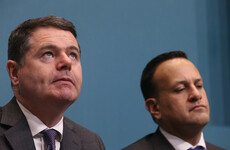
DÁIL ÉIREANN HAS passed all stages of the Social Welfare Bill by a margin of 80 votes to 76 this evening. The bill is one of the two main objectives of the Budget 2011.
Budget Deficit
# budget-deficit - Tuesday 18 September, 2012
Brussels approves latest €1bn loan under Ireland’s bailout programme
The European Commission confirms water charges will be in quicker than expected – and calls for tweaks to benefits for the jobless.
# budget-deficit - Tuesday 24 April, 2012
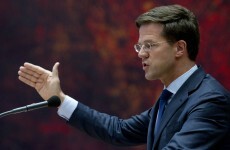
Dutch caretaker PM urges ‘responsibility’ over economic problems
Despite the fall of the country’s government over budget disagreements yesterday, the Netherlands raised €2 billion at a bond auction today.
# budget-deficit - Thursday 5 January, 2012
Column: Ireland faces a decade of austerity – so let’s not waste it
Economists tell us we’ve got ten years of financial difficulty – so do we want to buckle under, or use this opportunity to reshape Ireland? Aaron McKenna writes.
# budget-deficit - Tuesday 3 January, 2012
Ireland faces austerity ‘for as long as anyone can look forward’
Economist Joe Durkan has warned austerity will not end with the bailout deal in 2015 – and rejected criticisms of the ESRI.
# budget-deficit - Tuesday 1 November, 2011
Ireland’s finances €3.6bn better than thought – due to accounting error
A figure of €3.6 billion passed between State agencies was accidentally counted twice – creating an accounting error equal to 2.3 per cent of GDP.
# budget-deficit - Wednesday 14 September, 2011
Facebook joke about EU commissioner’s flag gaffe ‘not an official remark’
A comment on the EC’s official Facebook page, saying Gunther Oettinger has “form in the foot in mouth department”, was a joke.
German commissioner insists he doesn’t support ‘half-mast’ idea
Gunther Oettinger says lowering the flags of “default sinners” is an idea already out there – and that he didn’t say he supports it.
# budget-deficit - Tuesday 13 September, 2011
Germany’s EU commissioner wants Irish flag flown at half-mast
Günther Oettinger wants the flags of ‘deficit sinner’ countries – including Ireland – to be at half-mast at all EU institutions.
# budget-deficit - Tuesday 30 August, 2011
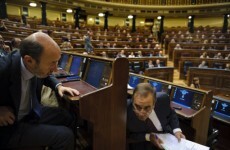
Spain lawmakers agree to deficit amendment talks
Spain’s Parliament is to discuss introducing a “debt brake” – which would stipulate that the country’s deficit could not exceed a certain percentage of GDP.
# budget-deficit - Monday 4 July, 2011
Budget deficit for first half of the year stands at €10.8bn
While the deficit is in line with the Department of Finance’s estimates, the tax-take for the first six months of 2011 is below the government’s forecast.
# budget-deficit - Friday 1 July, 2011
While Greece riots, Italy passes €47bn austerity plan
Europe’s financial worries deepen as Italy plans for more austerity measures to balance its budget.
# budget-deficit - Wednesday 11 May, 2011
ESRI calls for more cuts and higher taxes to wipe deficit
The economic think tank says Ireland should aim to cut it’s budget deficit within three years in order to return to the markets – and that this should be done through pay cuts, spending cuts and higher taxes.
# budget-deficit - Monday 21 February, 2011
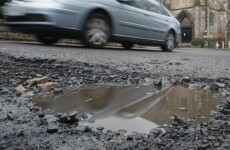
Pothole politics not on the agenda after all…
There’s a deficit of over €4bn in local government coffers which are going to hit basic services if not addressed by next government.
# budget-deficit - Thursday 9 December, 2010
# budget-deficit - Thursday 2 December, 2010
Ireland’s budget deficit not as bad as suspected
Exchequer figures show income tax take is down – but corporation tax receipts were higher than expected in November.
# budget-deficit - Tuesday 9 November, 2010
Rehn repeats mantra that Ireland will lose low tax
The European Commissioner repeats his assertion that Ireland will simply have to raise tax rates in order to survive.
# budget-deficit - Monday 8 November, 2010
EU economics chief arrives for two-day budget talks
Olli Rehn will meet with the Minister for Finance today to discuss the upcoming budget.
# budget-deficit - Monday 20 September, 2010
Deficit must be tackled quickly, Honohan warns
“Explicit reprogramming of the budgetary profile for the coming years is clearly necessary soon if debt dynamics are to be convincingly convergent.” No, we don’t know what that means either.
# budget-deficit - Tuesday 17 August, 2010
NINE EUROPEAN UNION member states have written to the European Commission asking it to change its accounting rules in a bid to try and artificially lower their official budget deficits.
The countries, mostly from Eastern Europe, have asked the bloc to consider changing its classifications so that the costs of reforming their various pension schemes do not count towards their budget deficits.
Lithuania, Latvia, Bulgaria, Sweden, Slovakia, Hungary, Romania, Poland and the Czech Republic say that reform of their pensions systems, while expensive, create long-term benefit while inflating their short-term budget shortfalls.
In a letter obtained by Reuters today, the countries backed a German proposal to introduce new penalties for countries which exceed the Union’s ‘glass ceiling’ of running a budget deficit of more than 3% of GDP.
But they wrote:
Maintaining the current approach to debt and deficit statistics would result in unequal treatment of Member States and thus effectively punish reforming countries.
The European Commission has described the proposal to change budgeting rules as a “relevant” one, but insiders believe it would be difficult to change the rules as they form part of the Stability and Growth Pact, amendments to which would require the assent of all 27 member states.
“There is likely to be some understanding for the position of the nine countries, but it is difficult to say how far it will go,” one source told Reuters. “To change the accounting rules everybody has to be on board, and some are not.”
Ireland is likely to face massive penalties from the EU one way or another, after its official statistical agency Eurostat ruled that Ireland’s costs of recapitalising Anglo Irish Bank would not be discounted from its budget deficit – meaning its deficit could be up to 24% of GDP, eight times the EU limit.