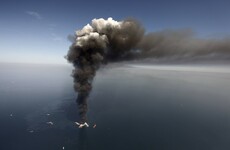
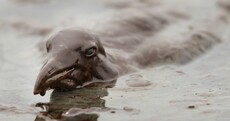
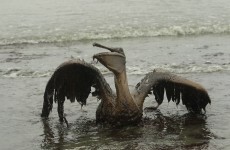
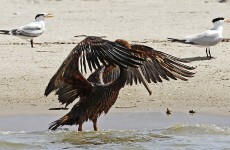
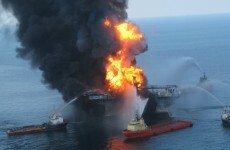
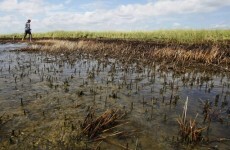
BP is an international oil and natural company that is based in London. The company was founded in 1909 as the Anglo-Persian Oil Company, but later changed their name to British Petroleum and then to BP. They are also in the alternative fuel industry and spend $1 billion per year in renewable energy research and development. The company was the centre of controversy in April 2010 following an explosion on one of their wells in the Gulf of Mexico that led to one of the largest oil spills in history.
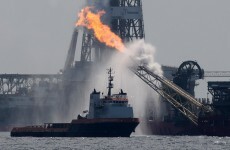
British prime minister David Cameron has confirmed that three Britons are dead and another three are presumed dead as other governments scramble for information on their citizens.
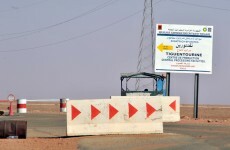
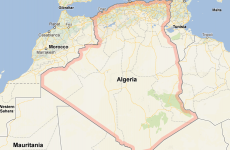
The Tánaiste Eamon Gilmore has called for the immediate release of an Irish citizen reportedly among those kidnapped from a BP oil field in the south of Algeria.
The company reports that it has raised its quarterly dividend by 14 per cent, even after making payments to compensate for the disastrous oil spill in the Gulf of Mexico.
BP will face protests at a shareholder meeting in London today, as fishermen complain of poor compensation for the oil spill and investors condemn excessive executive pay packets.
Unrest and protests in Libya are forcing oil prices to rise today as international oil companies prepare to evacuate their expat staff from Libyan operations.
Britain’s previous Labour government did “all it could” to help facilitate the release of Lockerbie bomber Abdelbaset Ali al-Megrahi, according to a new report.
Investigators say BP and the company which produced supplied the cement knew that the compound was unstable and could be vulnerable before the rig blew up.
BP’S EXECUTIVES will be happy that Brad Pitt doesn’t seem to plan on running for office any time soon: he wants to kill them.
Being interviewed for a new Spike Lee documentary about the effects of Hurricane Katrina on New Orleans, If God Is Willing and Da Creek Don’t Rise, Pitt said he had never supported capital punishment previously but was willing to make an exception for BP.
I was never for the death penalty before. I am willing to look at it again.
Pitt, along with partner Angelina Jolie, is the founder of the Make It Right organisation that has rebuilt homes in Louisiana after the devastation of the hurricane in 2005.
Lee’s film is the follow-up to his acclaimed 2006 work, When the Levees Broke: A Requiem in Four Acts.
BP HAS AGREED to pay a record $50.6m (€39.3m) fine for failing to impose the correct safety standards at a plant in Texas where 15 people were killed after an explosion in 2005.
The United States’ Occupational Safety and Health Administration (OSHA) said the penalty “rightly reflects BP’s disregard for workplace safety” and hopes to collect another $30m (€23.3m) in fines from BP relating to the incident.
The fine is the largest ever given out by the United States to an employer for violation of safety practices, and follows a similar fine of $21.5m levied for the same incident in 2005.
The fines are dwarfed, however, by the $500m BP has agreed to spend on fixing safety problems at the refinery, and the $373m it paid in 2007 to settle criminal and civil charges in respect of the explosion.
All of the above, however, will be massively superseded by the fines that the company will face as a result of the Deepwater Horizon oil spill in the Gulf of Mexico this year.
Its fines for that spill will range from a minimum of $1,100 (€836) to a maximum $4,300 (€3,269) per barrel spilled, depending on the level of negligence shown by BP – meaning the company could be fined as much as $21 billion as a result.
The American government has agreed, meanwhile, to accept BP’s revenues as collateral for its contributions to the fines, having originally demanded been reluctant to do so in case it ended up having to repossess the oil well that had caused such ecological damage.
BP will also likely face massive fines after it was found that warning alarms on the Deepwater Horizon rig, which exploded killing 11 people and triggering the Gulf spill, had been turned off so as to allow employees sleep through the night.
BP SAYS ITS much-ancitipated ‘static kill’ operation intended to seal the leak at the Gulf of Mexico oil well has been successful – meaning it can now press ahead with pouring cement on the leak and sealing it for good.
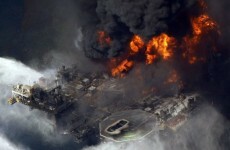
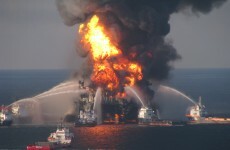
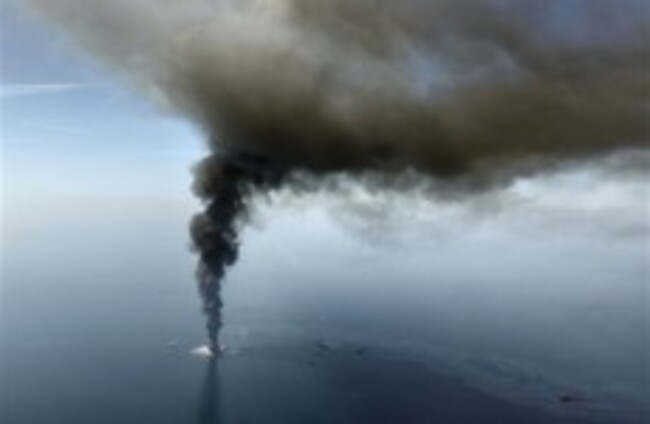
The procedure saw engineers pour huge quantities of thick, heavy mud onto the site of the leak of the underground Maconda well, which sprang after an explosion on board the Deepwater Horizon oil rig on April 20.
The mud has now reached a “static condition”, with the oil pressure being controlled exactly as engineers had hoped. BP has called the news a “significant milestone“.
While the flow of oil into the Gulf of Mexico itself had been stopped for two weeks after BP fitted a containment cap – manufactured by Cameron International in Longford – to the leak, the new procedure has halted oil flow from the well entirely.
In a statement, BP said that the construction of a relief well was the ultimate final course of action, and construction of the first well – which began in May – is scheduled for completion within two weeks.
Once the relief wells have been completed, engineers will simply need to pour cement over the site of the explosion to seal the damage for good.
In a separate development, a new US government survey has determined that only 26% of the oil released from the spill is still present in a thick-enough slick to cause any problems.
Most of the oil seeped by the well, it said, is either present merely in a light coat on the ocean’s surface or in smaller chunks below the surface. In both cases, oil collections are being rapidly broken down.
A US INQUIRY into the early release of the Lockerbie bomber has been postponed due to a lack of key witnesses. The US Senate’s Foreign Relations Committee announced the delay today, saying that several individuals who were asked to testify declined to appear.
Abdelbaset Ali Mohamed al Megrahi, 58, is the only person convicted of the 1988 bombing which killed 270 people. Most of the victims of the Lockerbie bombing were American.
He was released last summer by Scottish authorities after doctors said he would die within three months, but is still alive. Al Megrahi suffers from terminal prostate cancer.
BP’s Tony Hayward was one of those invited to the hearing.
Others who declined to appear include the Scottish Justice Secretary Kenny MacAskill, former British Justice Secretary Jack Straw, and Andrew Fraser, the physician who gave the prognosis which led to al Megrahi’s release.
The investigation intends to establish whether a BP oil deal with al Megrahi’s native Libya had any influence on the bomber’s early release. Last week, Scotland’s first minister Alex Salmond said the Scottish government “did not receive any representations from BP in relation to Mr Al-Megrahi.”
Scotland has set up this site to publish information regarding al Megrahi’s release.
BP CONFIRMED TODAY that CEO Tony Hayward will step down from his post in October. He will receive a compensation package worth over $13.5 million – but he still won’t be out of a job.
Hayward, 58, is reported to be taking up a non-executive role in BP’s Russian subisdiary, and paid a year’s salary worth around €1 million, in lieu of the one year’s notice he is entitled too. The company said the decision was made mutually.
He will also get an immediate annual pension of about €716,000 when he leaves the CEO position. The full pension pot is valued over €13 million, according to the BBC.
Hayward has been heavily criticised by US politicans and residents along the Gulf coast for his handling of the leak in the weeks after the April spill. He was accused of ‘stonewalling‘ the US Congress when questioned about the leak and subsequent clean-up.
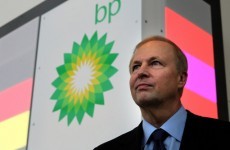
Bob Dudley, who will take over from Hayward, faces the unenviable task of overseeing the clean-up operation, and improving the company’s public image.
Today, the company posted a loss of $17 billion (€13 billion) – a record quarterly loss for the company. The company has reported profits of $4.39 billion (€3.38) for Q2 last year. BP also set aside $32.2 billion to cover costs arising from the oil spill, and will sell $30 billion in assets over the next 18 months to boost its finances.
Greenpeace activists in London succeeded in closing almost 50 BP petrol stations in a move timed to coincide with the company’s quarterly report. The day-long action is in protest against BP’s reaction to the oil spill, which Greenpeace says hasn’t gone far enough.
TONY HAYWARD is today expected to finalise the terms of his departure from BP’s top job – and can expect a golden handshake of £500,000 on top of his £10.8m (€12.9m) pension pot.
The 53-year-old CEO – who has been with BP for 28 years – has built up a massive pension fund which he can start drawing when he turns 60, but will be able to make do with the year’s salary he is entitled to, which also nets him over £1m (€1.19m).
He is also expected to be offered a golden handshake of £578,000 (€691,000).
Hayward’s position has been seen as increasingly untenable since an ill-fated comment after the Gulf of Mexico oil spill – which began after an explosion killed 11 of his staff – in which he declared: “I want my life back.”
President Barack Obama expedited Hayward’s departure by responding: “He wouldn’t be working for me after any of those statements.”
In a measure of BP’s need to reform its public image in the wake of the oil spill, it’s expected that Hayward will be succeeded by Bob Dudley, who – aside from being an American – has been charged with leading the Gulf clean-up operation.
The Irish Times leads with the announcement that the two Irish banks tested by the EU passed their stress tests, but says that questions have been asked about the rigour of their tests given the fact that just seven institutions (out of 91) failed.
It also carries news of how Richard Bruton told the MacGill Summer School that Fine Gael would replace every single member of every State board within six months of taking office, should they win the next general election.
Inside, it reveals that Lucinda Creighton held a fundraising event in April that was attended by a heavily indebted property developer – and that she was unaware that he had been hauled before the Commercial Court just a month before.
The Times’ magazine recounts the experiences of an Irish graduate, Sarah Geraghty, who moved to Washington for nine months to kick-start her career.
The Irish Independent leads with a declaration of how a series of forthcoming mortgage interest rate hikes will send homeowners “right over the edge” and break their finances beyond repair, according to mortgage experts.
Inside, it reports that a Galway resident was sentences to five years in prison after being found guilty of attacking his wife’s toes with a Stanley knife, as well as biting her noes and slashing her face in a subsequent attack.
The Weekend Review magazine profiles RTÉ broadcaster Miriam O’Callaghan and how she sustains “a loving husband, the happy family, and a media career that has broken the mould” at the age of 50.
The Irish Examiner leads with calls for a national debate on knife crime from victims’ support groups, after 20-year-old James Joyce was stabbed to death in front of his pregnant girlfriend.
It also reports on criticisms from residents across the country at government plans to introduce tolls on national roads, with reports coming from Age Action Ireland, the AA and from Fianna Fáil backbenchers.
The Star leads with a similar tack to the Examiner, revealing that Joyce told his friends “I’m alive” seconds before he was fatally stabbed on Thursday night.
Inside, it disappoints readers by claiming it could not coax Paul the Octopus to predict the winners of the Galway Races.
On its back page it carries a warning to Juventus from two-time former coach and current Ireland manager Giovanni Trapattoni, saying that Shamrock Rovers have the potential to cause them serious problems in their Europa League clash.
Abroad, The Guardian leads with the political return of Gordon Brown, who in his first major appearance since the formation of the Conservative-Liberal Democrat coalition, called for ‘smart aid’ for Africa.
Haaretz of Israel reports that the country has warned the UN that North Korea’s plans to develop ballistic missiles could scupper plans for peace in the Middle East.
And in France, Le Figaro reports that the Deepwater Horizon explosion that caused the BP oil leak in the Gulf of Mexico could have been avoided, because safety alarms on the platform had been turned off to let employees sleep.
1. BP’s CEO said he wanted his life back – after 11 people died on the rig
BP’s CEO Tony Hayward apologised for the “disruption” the oil spill had caused to the lives of people living along the Gulf coast. Then he explained that he wanted the whole thing over because, he said, “I’d like my life back.”
2. And then he went on holidays
Tony Hayward enjoyed some nice oil-free waters when taking part in a yacht race off the coast of southern England last month. A BP spokesperson said he was taking a break from overseeing BP’s efforts to stem the leak, before the leak was actually stemmed.
3. It got creative with photos of its clean-up efforts
BP released edited photos which seemed to show the hectic efforts being made in BP HQ to plug the leak. Turns out three of the screens in the crisis command centre were not actually running any video feeds at the time.
4. It turned the alarms off just before the accident
The alarm system on the Deepwater Horizon was partially shut down on the day the rig exploded, according to an electronics technician who worked on the rig. Speaking to an investigative panel in the US, the technician said that the company didn’t want a false alarm waking people up at night.
5. It got caught up in the Lockerbie bombing.
BP has been trying to dissociate itself from any suggestions that it influenced Scotland’s decision to release the Lockerbie bomber. The company admitted to lobbying the UK government over a Libya prisoner transfer deal, but said it did not specifically push for al-Megrahi’s release.
THE SCOTTISH EXECUTIVE Alex Salmond has said that his administration released Abdelbaset Ali Mohmed al Megrahi on compassionate grounds last year.
Salmon reportedly wrote a strongly worded letter to US senator John Kerry, denying that BP had anything to do with Scotland’s decision.
He expressed his “revulsion” at al-Megrahi’s actions, which resulted in the deaths of 270 people, but stressed compassion.
Salmon wrote:
“I can say unequivocally that the Scottish Government has never, at any point, received any representations from BP in relation to al Megrahi.
That is to say we had no submissions or lobbying of any kind from BP, either oral or written, and, to my knowledge, the subject of al Megrahi was never raised by any BP representative to any Scottish Government minister. That includes the Justice Minister, to whom it fell to make the decisions on prisoner transfer and compassionate release on a quasi-judicial basis.”
Scotland has released 39 prisoners on the basis of an application for compassionate release, which was introduced in 1993.
Medical tests received by the Scottish authorities last year indicated that al-Megrahi, who is suffering from terminal cancer, would die within three months.
HOT ON THE HEELS of the Deepwater Horizon oil spill and allegations of striking a deal to free a convicted mass murderer, BP has managed to execute yet another spectacular PR blunder.
Amidst global conern about the millions of gallons of oil pumping in to the Gulf of Mexico, BP established a “Response in Pictures” page on its website, to prove to the public just how hard it’s been working to solve the problem.
Unfortunately for BP, its marketing department is about as good at Photoshop as its engineers are at plugging underwater oil wells.
On closer inspection of the photographs purportedly featuring the hectic efforts in BP HQ to plug the leak, a US blog picked up on the tell-tale signs of an amateur graphics editor at work.
When confronted by the Washington Post, BP issued a statement, explaining that the photographer working for the company had “pasted three ROV screen images in the original photo over three screens that were not running video feeds at the time.”
The statement didn’t elaborate on the reasons why three screens in the crisis command centre – that were supposed to be monitoring the largest oils spill in US history – were blank.
BP has since replaced the altered photo with the original.
BRITISH PRIME MINISTER David Cameron has met with US senators who believe that BP may have made an deal in exchange for the release of Abdelbaset al-Megrahi.
Senators believe that Libya, an oil-rich country, struck a profitable oil deal with BP in return for Scotland allowing the Lockerbie bomber to return home.
Al-Megrahi was released from his prison sentence by the Scottish authorities on compassionate grounds, following a medical report that said he had no more than three months to live as he was suffering from terminal cancer.
However, al-Megrahi is still alive one year later.
The Scottish government said yesterday that it had published all information relating to al-Megrahi’s release ‘where we had the necessary permission to do so’.
Senators met with Cameron for nearly an hour last night to discuss an investigation into the possible oil deal that might have secured al-Megrahi’s release.
New York senator Chuck Schumer said: “We made the case that there’s just too much suspicion here to sort of brush this aside.”
However, while Cameron condemned the prisoner’s release, he seems reluctant to investigate the possibility of an oil deal being struck between BP and Libya. He has already quashed calls for an investigation in the UK.
DAVID CAMERON appeared to shift the blame for the release of the Lockerbie bomber, Abdel Baset al-Megrahi, to Scotland. The British PM was questioned about al-Megrahi’s early release while on his first visit to the White House.
Cameron said that releasing the bomber was “a decision for the Scottish executive”, and that it was they who took that decision. He said that the release was wrong and has asked the cabinet secretary to decide if any more relevant papers should be published. Those papers could include phone conversations between Jack Straw and BP.
Last year, former British Justice Secretary Jack Straw said that the bomber’s release was linked to oil and “commercial interests” between Britain and Libya.
Al-Megrahi remains the only person convicted for the bombing of a Pan Am plane over Scotland in 1988 in which 270 people in the air and on the ground were killed.
Al-Megrahi, 58, suffers from terminal prostate cancer and was released last summer after doctors said he would die within months. One of those doctors recently admitted his embarrassment that the bomber is still alive.
Cameron also touched on another sore point among Americans – the BP oil spill. He said that he believed the company would cap the leak, clear up the spill and pay appropriate compensation.
A PUBLIC INQUIRY into the release of the Lockerbie bomber has been called for. Abdelbaset al Megrahi was released last year on compassionate grounds with an estimated three months left to live. However suspicions that a deal was struck with BP struck an oil deal with Libya have now surfaced.